
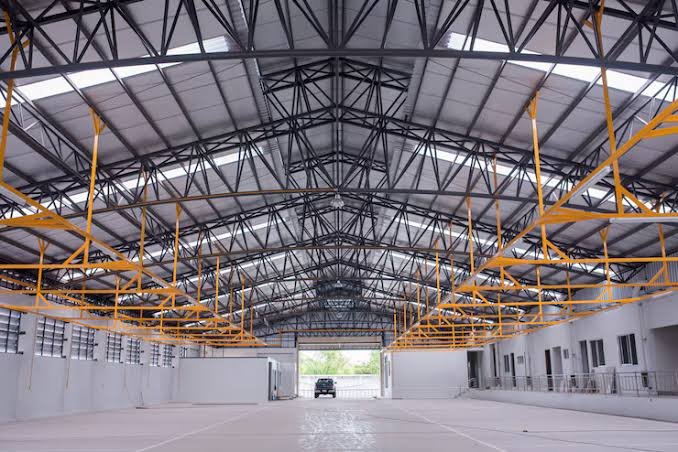
Key takeaways
- Profile roofing sheets form the layer of protection against outdoor weather a cornerstone of Factory Shed Cooling Solutions in Central India.
- Bubble insulation can help cut down radiant heat passing through the roof a key part of Factory Shed Cooling Solutions in Central India.
- Turbo ventilators help exhaust hot air and boost natural ventilation.
Why Do Factory Sheds Become Extremely Hot in Summer?
In the summer temperatures across Central India can make industrial sheds uncomfortable for workers and difficult for work.
Large metal roofs soak up sunlight and push heat inside the building.
When ventilation is limited hot air stays inside raising temperatures all day.
For factories, workshops and warehouses managing this heat is not about comfort. Factory Shed Cooling Solutions in Central India can also influence worker productivity, equipment performance and the working environment.
A planned roofing and ventilation system can help lower heat buildup inside industrial buildings.
1. Choose the Right Profile Roofing Sheets
The roof is one of the surfaces that face direct sunlight. Picking suitable profile roofing sheets is a first step.
- Coating: Pick roofing sheets that have reflective finishes.
- Thickness: Pick sheet thickness that matches needs and the application.
- Profile design: Make sure the roofing profile helps water drain properly and is easy to install.
- Installation:. Overlap correctly to avoid gaps and leaks.
Choosing the roofing material gives a solid start for an effective industrial shed.
2. Install Bubble Insulation Under the Roof
Bubble insulation is made to cut down heat passing through the roof. When installed right as part of a roofing assembly it can improve indoor thermal comfort.
Key benefits include:
- Reduces heat that enters the shed.
- Adds another insulation layer under the roofing sheets.
- Supports a more comfortable working environment.
- Can be used in factories, workshops and storage buildings.
Effectiveness depends on the insulation material, how it is installed, air gaps and the overall roof design.
3. Improve Air Circulation with Turbo Ventilators
Heat naturally builds up near the roof of industrial buildings. Without ventilation this hot air can stay trapped inside.
Turbo ventilators exhaust air by rotating with the wind. They do not need electricity to run although their performance depends on wind and building design.
They can be used for:
- Manufacturing units
- Industrial workshops
- PEB structures
- factory sheds
- Commercial and storage buildings
For better results plan ventilation based on shed size, air inlets and internal heat sources.
4. Plan the Complete Roofing System
Installing insulation or ventilators may not solve every heat problem. A coordinated roofing system is usually a way.
A practical industrial roofing plan may include:
- Suitable profile roofing sheets.
- Bubble insulation beneath the roof.
- Positioned turbo ventilators.
- Adequate air inlets for air circulation.
- A designed PEB or MS tubular framework.
Choose each component based on the building’s needs.
5. Get Your Factory Shed Ready for Summer
Before summer starts inspect the roof, insulation, ventilation openings and drainage. Look for sheets, loose fasteners, blocked ventilators and spots where hot air gets trapped.
Effective factory cooling starts with better roofing design, insulation and ventilation working together.
At Greater explore roofing and building solutions such as profile roofing sheets, bubble insulation, turbo ventilators and structural systems for various projects.
Action checklist
- Inspect the factory roof before summer.
- Evaluate whether bubble insulation is suitable for the building.
- Review turbo ventilator. Fresh-air inlet requirements.
- Consult a roofing to plan an integrated cooling solution.